The Ultimate Guide to Choosing a Drag and Drop Website Builder
A drag and drop website builder is the most efficient tool for small business owners to launch a professional online presence without needing coding skills. These platforms allow you to visually assemble your site layout, ensuring you can manage your digital storefront with complete creative control.
Table of Contents
- Why Drag and Drop Builders Are Essential for Modern Entrepreneurs
- Key Features to Look for in No Code Website Design Tools
- How WalnutZite Simplifies Responsive Website Design
- Comparing Traditional Development vs Drag and Drop Solutions
- Optimizing Your Business Site for Speed and Global Performance
- Steps to Launching Your Professional Website Today
- Frequently Asked Questions
- Conclusion
In today's fast-paced digital landscape, the ability to pivot your marketing strategy or update your product catalog in real-time has become a non-negotiable advantage. Traditional web development often involves lengthy timelines and significant financial investment, creating barriers that can stifle the agility of a growing venture. By choosing the right no-code solution, entrepreneurs can bypass these technical bottlenecks, focusing instead on user experience and brand storytelling. Modern tools have evolved to prioritize intuitive interfaces, allowing you to drag and drop elements precisely where they are needed while maintaining clean, high-performance architecture under the hood. As you navigate the crowded market of design platforms, the primary goal remains finding a balance between aesthetic flexibility and robust functionality. Selecting the correct system not only streamlines your initial launch but also ensures that your site remains responsive and scalable as your business expands. Whether you are a solo entrepreneur or managing a small team, leveraging these sophisticated yet accessible design environments empowers you to compete effectively by delivering a seamless, high-speed experience to every visitor who lands on your pages.
Why Drag and Drop Builders Are Essential for Modern Entrepreneurs
In the fast-paced digital landscape of today, an entrepreneur’s time is their most valuable asset. The ability to launch a professional online presence without waiting weeks for development cycles has transformed how businesses approach their digital strategy. A drag and drop website builder serves as the bridge between a visionary idea and a live, functional storefront, empowering business owners to maintain total control over their brand identity.
The primary advantage of these platforms is the democratization of web development. By utilizing intuitive interfaces, entrepreneurs can manipulate page elements in real-time, seeing exactly how their site will appear to customers. This shift toward no code website design allows individuals with no formal programming background to construct complex layouts, manage e-commerce integrations, and optimize user experience without writing a single line of code. This autonomy not only accelerates the path to market but also significantly reduces the overhead costs traditionally associated with hiring external development teams.
Furthermore, these tools are built to handle the complexities of multi-device navigation automatically. Modern consumers expect a seamless experience whether they are browsing on a desktop or a smartphone. By leveraging high-quality responsive website design tools integrated directly into the builder, entrepreneurs ensure that their site layout adapts fluidly to any screen size. This consistency is crucial for maintaining professional credibility and improving search engine visibility.
Ultimately, a drag and drop website builder is not merely a convenience; it is a strategic business tool. It grants the agility required to pivot marketing campaigns, update seasonal offerings, or refresh brand aesthetics instantly. By removing the technical barriers that once hindered small business growth, these platforms allow entrepreneurs to focus on what truly matters: refining their products, engaging with their target audience, and scaling their operations in an increasingly competitive global economy. With the right builder, the technical burden of maintaining a digital storefront disappears, leaving only the potential for innovation and growth.
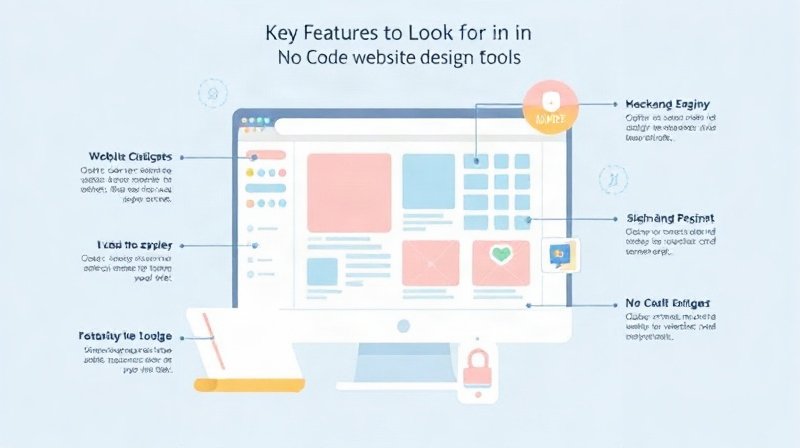
Key Features to Look for in No Code Website Design Tools
Selecting the right platform is critical when you decide to รับทำเว็บไซต์ no code. Because a drag and drop website builder serves as the foundation of your digital presence, it must offer more than just basic functionality. The most effective tools provide a seamless bridge between complex design ideas and live execution, ensuring you do not need to touch a single line of code.
Intuitive Interface and Flexibility
The primary appeal of a drag and drop website builder is its ease of use. Look for platforms that offer a "What You See Is What You Get" (WYSIWYG) editor. This allows you to visualize changes in real-time, making it an ideal choice for those who need to สร้างเว็บไซต์สำเร็จรูปสำหรับธุรกิจ without hiring a developer. A high-quality tool should provide granular control over padding, margins, and layout alignment, ensuring your site looks professional on all devices.
Essential Performance Capabilities
Beyond aesthetics, you need a robust infrastructure. A fast website builder for entrepreneurs must prioritize page load speeds, as these metrics are vital for user retention and search engine performance. Ensure the tool you choose offers:
- Responsive Design Templates: Automatic adjustments for mobile, tablet, and desktop views.
- SEO Optimization Tools: Built-in settings for meta titles, descriptions, and alt-text management.
- Third-Party Integrations: The ability to connect marketing, payment, and analytics tools effortlessly.
Security is equally important. Regardless of the tool’s simplicity, it should provide integrated SSL certificates to protect your data and build visitor trust. Finally, consider the scalability of the platform. As your business grows, your drag and drop website builder should allow you to add advanced features like e-commerce functionality or membership portals without requiring a complete migration to a new system. By focusing on these core pillars, you ensure your online venture remains agile and competitive in today’s evolving digital landscape.
How WalnutZite Simplifies Responsive Website Design
Achieving a seamless user experience across all devices is no longer a luxury but a necessity for modern businesses. WalnutZite addresses this challenge by integrating advanced technology directly into its interface, allowing users to build professional sites without needing deep technical knowledge. As a premier drag and drop website builder, it eliminates the complexity of coding, ensuring that your layout adjusts fluidly to any screen size.

Intelligent Layout Adaptation
The core strength of WalnutZite lies in its ability to handle complex design elements automatically. When you move an image or a text block, the system calculates the spacing and alignment to ensure the content remains readable on both desktop and mobile devices. This is a significant advantage for those looking for responsive website design tools that provide real-time visual feedback. By using this drag and drop website builder, you can preview how your site renders on various viewports with a single click, allowing for immediate adjustments that keep your design consistent.
Streamlined Workflow for Mobile Optimization
Many users struggle with the transition from desktop editing to mobile formatting. WalnutZite simplifies this through its intuitive grid system, which serves as a powerful เครื่องมือทำเว็บไซต์รองรับมือถือ (mobile-responsive website tool). Instead of manually restructuring every page, the โปรแกรมสร้างเว็บไซต์แบบลากวาง handles the stacking order of your elements automatically. This ensures that your navigation menus, call-to-action buttons, and media galleries maintain their functionality and aesthetic appeal regardless of the device being used.
By focusing on a fluid, grid-based architecture, WalnutZite allows creators to focus on their brand story rather than the technical hurdles of CSS media queries. The result is a high-performing website that satisfies search engine requirements for mobile-friendliness while providing an engaging experience for your visitors. Today, having a versatile drag and drop website builder is the most efficient way to ensure your digital presence is both beautiful and functional on every screen.
Comparing Traditional Development vs Drag and Drop Solutions
Choosing between traditional web development and a modern drag and drop website builder is one of the most critical decisions for a business owner. Traditional development, often involving HTML, CSS, and JavaScript, offers unparalleled control over every pixel and backend function. However, this level of customization requires significant time, technical expertise, or a dedicated team of developers to manage ongoing updates and maintenance.
The Case for Efficiency
For many, the primary advantage of a drag and drop website builder is the drastic reduction in time-to-market. By utilizing pre-designed blocks and intuitive visual interfaces, creators can launch a professional site in a fraction of the time required for custom coding. This agility makes it a particularly fast website builder for entrepreneurs who need to validate ideas or establish an online presence quickly without waiting for development cycles.
Balancing Control and Accessibility
Traditional development remains the gold standard for large-scale enterprise applications that require complex integrations or unique database structures. If your project demands high-level architectural complexity, you might find more utility in traditional programming languages as described on the Wikipedia page for web development. Conversely, a drag and drop website builder democratizes the design process, allowing non-technical users to make real-time adjustments without risking the structural integrity of the site.
Ultimately, the choice depends on your specific goals. If you prioritize total creative freedom and bespoke functionality, traditional development is the clear path. However, if your priority is agility, ease of use, and a streamlined workflow, a drag and drop website builder provides the tools necessary to stay competitive in today’s fast-paced digital landscape. By removing the technical barriers to entry, these platforms empower you to focus on your core business goals rather than the complexities of server-side management or front-end debugging.
Optimizing Your Business Site for Speed and Global Performance
Even the most sophisticated drag and drop website builder can result in a sluggish site if you do not prioritize performance optimization. Speed is not merely a technical metric; it is a fundamental pillar of user experience that directly influences your conversion rates and search engine rankings. When a visitor arrives at your business site, they expect near-instant loading times, regardless of their geographical location or the device they are using.
To ensure your site remains competitive, start by managing your media assets. High-resolution images are often the primary culprit behind slow page loads. Before uploading visuals to your drag and drop website builder, compress your files to reduce their footprint without sacrificing visual quality. Additionally, leverage lazy loading features if your platform supports them, as this ensures that images only load when they scroll into the user's viewport.
Leveraging Content Delivery Networks
For businesses targeting a global audience, relying on a single server location is insufficient. A Content Delivery Network (CDN) acts as a bridge between your site and your international visitors. By caching your website’s static content—such as CSS, JavaScript, and images—across a distributed network of servers worldwide, a CDN ensures that your data is physically closer to the end-user. This reduces latency significantly, providing a seamless browsing experience whether your visitor is in London, Tokyo, or New York.
Furthermore, keep your site architecture lean. Avoid excessive use of third-party scripts, widgets, or unnecessary plugins that can bloat your code. Most modern tools allow you to monitor your site’s health through built-in performance dashboards. Regularly auditing your site ensures that your drag and drop website builder continues to deliver a professional, fast, and reliable experience. Remember, a high-performing website is one of the most effective tools for building trust with your audience and establishing your authority in a crowded digital marketplace.
Steps to Launching Your Professional Website Today
Launching your digital presence no longer requires a degree in computer science. With a modern drag and drop website builder, the transition from a blank canvas to a live, professional site is a streamlined process. By following a structured approach, you can ensure your site is not only visually appealing but also optimized for user engagement and performance.
Refining Your Digital Foundation
Before you hit the publish button, take a moment to audit your design. Ensure that your navigation menu is intuitive, allowing visitors to find key information within seconds. A drag and drop website builder excels at this, as it allows you to rearrange elements in real-time to test different user journeys. Check that your call-to-action buttons are prominent and that your contact forms are functioning correctly. Testing across both desktop and mobile devices is essential, as the layout may shift depending on the screen size.
Optimizing for Search and Performance
Once your layout is finalized, focus on your metadata. Most platforms provide integrated fields for page titles and meta descriptions; these are critical for helping search engines understand your content. Ensure your images are compressed to keep load times fast, as speed is a significant factor in user retention. If you are curious about the technical standards that underpin modern web accessibility, you can refer to the W3C Web Accessibility Initiative for best practices.
The Final Review
Perform a final walkthrough of your site. Proofread your copy for clarity and tone, and verify that all external links are active. Once you are satisfied, review your domain settings to ensure your custom URL is properly connected. By leveraging the flexibility of a drag and drop website builder, you have built a foundation that can grow alongside your business. Simply click publish, and your professional website is ready to serve your audience effectively.
Frequently Asked Questions
Are drag and drop website builders good for SEO?
Yes, modern drag and drop website builders are generally well-optimized for search engines. Most platforms now provide built-in tools to manage meta titles, descriptions, and alt tags. When choosing a builder, look for one that offers clean code output and fast page loading speeds, as these are critical factors for ranking well in search results.
Do I need to know how to code to use a drag and drop builder?
No, the primary purpose of a drag and drop website builder is to eliminate the need for coding knowledge. You can design your site by moving elements like text boxes, images, and buttons directly onto the canvas. While some platforms allow you to add custom CSS or HTML for advanced styling, you can build a fully functional and professional-looking website without ever writing a single line of code.
Can I move my website to a different platform later?
Moving a website between different drag and drop builders can be challenging because most use proprietary systems. While you can typically export your text content and images, the design layout and specific functional elements usually do not transfer automatically. It is best to choose a platform that meets your long-term needs to avoid the manual effort of rebuilding your site on a new system.
How do I choose the best drag and drop builder for my business?
To choose the right builder, consider your specific goals. If you are launching an online store, prioritize platforms with strong e-commerce features and secure payment integration. If you are building a portfolio or a simple business presence, look for intuitive design templates and responsive mobile editing tools. Testing a few platforms using their trial periods can help you determine which interface feels most natural for your workflow.
Conclusion
Choosing the right drag and drop website builder is a pivotal step in establishing your digital footprint. By prioritizing intuitive interfaces, responsive design templates, and robust customization options, you can bridge the gap between complex web development and professional-grade results. Whether you are launching a personal portfolio or scaling a business venture, these platforms provide the agility needed to iterate quickly without the steep learning curve of traditional coding. The key takeaway remains that the best tool is one that aligns with your specific technical comfort level while offering enough scalability to grow alongside your project.
At our core, we remain committed to demystifying the web design process, ensuring that you have the clarity and confidence to make informed decisions. We have spent years analyzing the landscape of site-building technology, testing dozens of platforms to evaluate their ease of use, performance, and design integrity. Our goal is to empower you with the expertise required to navigate these digital solutions effectively. As you move forward, remember that a website is a living asset; by selecting a reliable builder today, you are laying a solid foundation for long-term success, brand consistency, and an engaging user experience that resonates with your audience.